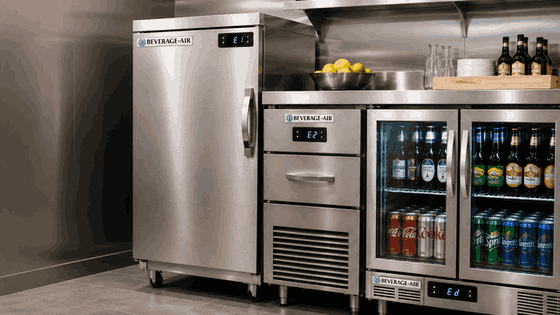
A Beverage-Air refrigerator low temperature alarm usually means the cabinet is reading colder than expected or the controller believes the unit is dropping below its normal operating range. Staff may see a low-temperature warning, notice product starting to freeze, or find that the display temperature does not match normal cabinet behavior.
For San Jose restaurants, cafés, bars, markets, and commercial kitchens, this alarm should be reviewed as a temperature-control issue. A Beverage-Air refrigerator needs accurate sensor feedback, balanced airflow, proper door sealing, controller response, and normal compressor cycling to keep product cold without overcooling.
A commercial refrigerator does not simply run until the cabinet gets cold. It has to cool to a target range, read cabinet temperature, and stop or adjust cooling when that range is reached.
A low temperature alarm can appear when the unit is actually too cold, when the temperature sensor is reading incorrectly, or when airflow inside the cabinet is uneven. The controller may also respond incorrectly if a relay, sensor, or control board is not behaving as expected.
Staff may notice frozen drinks, icy product, damaged produce, or containers that feel colder than usual. The display may show a low reading after closing, overnight, during slow business hours, or when the cabinet is lightly stocked.
In some cases, only one section of the refrigerator is too cold. Product near vents may freeze while other areas feel normal. In other cases, the whole cabinet runs colder than expected, which can point toward sensor feedback, controller, relay, or refrigeration-control problems.
Some low-temperature alarms are affected by use conditions. A lightly loaded or nearly empty cabinet can change air temperature faster than a normally stocked unit. Product placed directly in the cold airflow path may also freeze even when the average cabinet temperature looks acceptable.
Repair-level causes are different. These may include a faulty temperature sensor, inaccurate controller reading, stuck relay, control-board issue, evaporator airflow problem, wiring fault, thermostat/control failure, or refrigeration operation that does not shut off correctly.
The key question is whether the alarm happens only during light-load conditions or continues during normal stocked operation.
Staff can safely check whether product is placed directly against interior vents or airflow outlets. Move items away from obvious cold-air paths if normal operating procedures allow it, and avoid overpacking shelves in a way that disrupts circulation.
Check whether doors close fully and whether gaskets seal evenly. Record the displayed temperature, alarm timing, product load, cabinet section affected, and whether product is freezing near vents or throughout the unit.
Do not remove panels, open controller compartments, test wiring, access sensors, adjust internal components, handle refrigerant lines, or reset breakers repeatedly.
A refrigerator that is too cold can damage product, freeze items that should only be chilled, and create inconsistent prep or service conditions. Low-temperature alarms may also hide sensor or controller problems that can later turn into broader temperature instability.
Clearing the alarm may stop the display warning, but it will not correct a failed sensor, stuck relay, airflow imbalance, wiring fault, or controller problem. If product continues freezing or the warning returns, the unit should be evaluated before inventory is affected.
Bestech Repair checks low-temperature alarms as a full temperature-control sequence. A technician can evaluate sensor feedback, controller response, relay behavior, compressor cycling, evaporator airflow, door sealing, product placement effects, wiring condition, and whether the issue changes with cabinet load.
The goal is to determine whether the Beverage-Air refrigerator low temperature alarm comes from light-load behavior, airflow placement, inaccurate sensing, control failure, or refrigeration operation that is not cycling correctly.
A Beverage-Air refrigerator with recurring low-temperature alarms can affect product quality and daily storage routines. Bestech Repair provides Beverage-Air commercial refrigeration repair in San Jose for low-temperature warnings, overcooling, frozen product, sensor problems, controller faults, relay issues, airflow concerns, wiring problems, and refrigeration-control failures.
A Beverage-Air refrigerator low temperature alarm may be caused by light cabinet load, product placed too close to airflow outlets, uneven air distribution, inaccurate temperature sensors, stuck relays, controller faults, wiring issues, thermostat/control problems, or refrigeration cycling failures. Staff can safely observe product placement, door closure, gasket contact, displayed temperature, alarm timing, and whether freezing happens in one area or throughout the cabinet. If the alarm returns or product begins freezing, professional diagnosis is the safer next step.
Bestech Repair – San Jose, CA
📍 Address: 919 S Winchester Blvd, San Jose, CA 95128
📧 Email: office@bestechrepair.com
📞 Phone: +1-408-906-8668
🕒 Open Hours: Monday – Sunday: 8:00 AM – 8:00 PM.
Read reviews about our repair, installation and maintenance services. Our trained experts are always ready to help. To schedule your next appointment, give us a call or complete our online form.

Leave your contact details for communication with the operator, indicate a convenient date for yourself and our operators will contact you or call us: