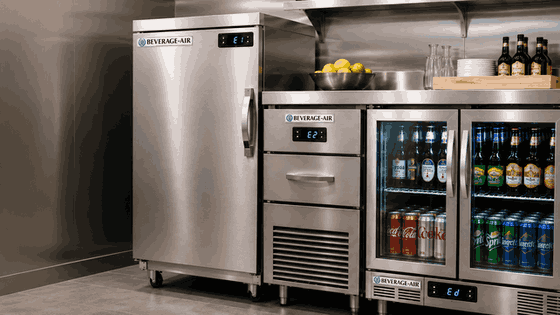
A Beverage-Air refrigerator slow to pull down temperature problem usually means the cabinet takes too long to return to its target range after loading, door openings, cleaning, or a warm kitchen period. The unit may still run, but recovery feels delayed, product temperature may stay higher than expected, and staff may see repeated temperature alerts.
For San Jose restaurants, cafés, bars, markets, and commercial kitchens, slow pull-down should be treated as a cooling-performance warning. A Beverage-Air refrigerator depends on airflow, door sealing, condenser heat release, fan operation, temperature sensing, compressor response, and controller feedback. If one part of that sequence weakens, the cabinet may cool too slowly even though the equipment is not completely off.
Pull-down is the refrigerator’s ability to bring the cabinet temperature back down after heat enters the unit. Heat can enter through open doors, warm product, overpacked shelves, poor gasket contact, or a hot kitchen environment.
A healthy commercial refrigerator should recover in a reasonable pattern after normal use. If the display stays high for too long, the unit may be struggling to remove heat, move air, or read cabinet temperature correctly.
Staff may notice the issue after a delivery, after stocking drinks, during rush periods, or after frequent door traffic. The refrigerator may alarm, run longer than normal, or show a temperature that drops very slowly.
Sometimes the cabinet feels cool near the vents but warmer near the front or lower shelves. In other cases, the entire cabinet remains warmer than expected. That difference can help separate airflow distribution problems from broader refrigeration-system problems.
Some slow pull-down conditions are tied to normal use patterns. Warm product placed directly into the cabinet, doors held open during stocking, blocked interior vents, or overloaded shelves can slow recovery.
Repair-level causes are different. These may include weak evaporator airflow, condenser fan failure, dirty or restricted condenser conditions, compressor stress, sensor faults, controller problems, defrost issues, refrigerant loss, sealed-system restrictions, wiring problems, or a door gasket that no longer seals correctly.
The key question is whether the unit recovers after normal loading and door closure, or whether it stays warm even under light use.
Staff can safely check whether doors close fully and whether gaskets make even contact. Look for product blocking interior vents or shelves packed so tightly that air cannot circulate.
Check visible ventilation clearance around the refrigerator. Make sure boxes, trays, towels, or nearby equipment are not blocking airflow around the cabinet. Record the displayed temperature, product load, time of day, door traffic, and whether the slow pull-down happens after stocking or during normal operation.
Do not remove panels, open controller compartments, test wiring, access fans, clear internal coils with tools, handle refrigerant lines, or reset breakers repeatedly.
A refrigerator that pulls temperature down too slowly can affect product quality, prep timing, and food-safety routines. Even if the unit eventually reaches temperature, delayed recovery may mean it is working harder than it should.
Lowering the set point repeatedly will not fix blocked airflow, worn gaskets, fan problems, condenser restriction, compressor strain, sensor faults, or sealed-system issues. If product temperature is rising or staying high, staff should follow internal food-safety procedures and protect temperature-sensitive inventory when possible.
Bestech Repair checks slow recovery as a full cooling sequence. A technician can evaluate door sealing, cabinet airflow, evaporator fan response, condenser airflow, compressor behavior, temperature sensor feedback, controller operation, defrost performance, wiring condition, and whether the refrigerator recovers under normal load.
The goal is to determine whether the Beverage-Air refrigerator slow to pull down temperature problem comes from heavy use conditions, blocked airflow, gasket issues, fan failure, condenser restriction, controller error, compressor stress, or a sealed refrigeration fault.
A Beverage-Air refrigerator that cools slowly can disrupt stocking, service timing, and product storage. Bestech Repair provides Beverage-Air commercial refrigeration repair in San Jose for slow pull-down, high-temperature alerts, warm cabinet problems, fan issues, gasket concerns, condenser problems, sensor faults, controller failures, wiring issues, and refrigeration-system symptoms.
A Beverage-Air refrigerator may be slow to pull down temperature because of warm product loading, frequent door traffic, blocked vents, overpacked shelves, damaged gaskets, poor ventilation, condenser restriction, fan failures, sensor problems, defrost faults, compressor stress, controller issues, refrigerant concerns, or sealed-system restrictions. Staff can safely observe door closure, gasket contact, product placement, displayed temperature, airflow clearance, and recovery timing. If slow pull-down continues after normal visible checks, professional diagnosis is the safer next step.
Bestech Repair – San Jose, CA
📍 Address: 919 S Winchester Blvd, San Jose, CA 95128
📧 Email: office@bestechrepair.com
📞 Phone: +1-408-906-8668
🕒 Open Hours: Monday – Sunday: 8:00 AM – 8:00 PM.
Read reviews about our repair, installation and maintenance services. Our trained experts are always ready to help. To schedule your next appointment, give us a call or complete our online form.

Leave your contact details for communication with the operator, indicate a convenient date for yourself and our operators will contact you or call us: