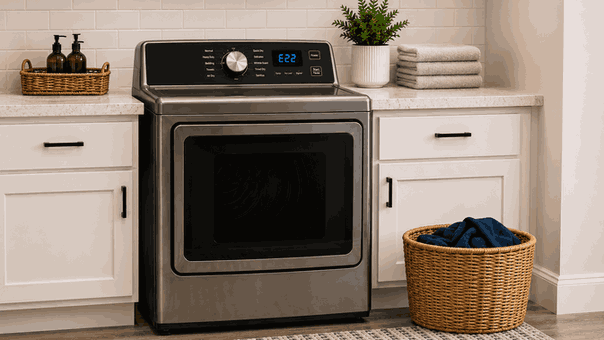
A Fisher and Paykel dryer taking too long to dry problem often shows up gradually. Clothes may feel damp after a full cycle, towels may need a second run, or lighter items may dry while heavier fabrics stay wet. The dryer may still heat and tumble, but drying performance becomes slower than normal.
For San Jose homeowners, this issue can waste time and energy. A long drying cycle may be caused by airflow restriction, lint buildup, overloaded loads, moisture-sensing trouble, weak heat, venting problems, or a repair-level dryer fault.
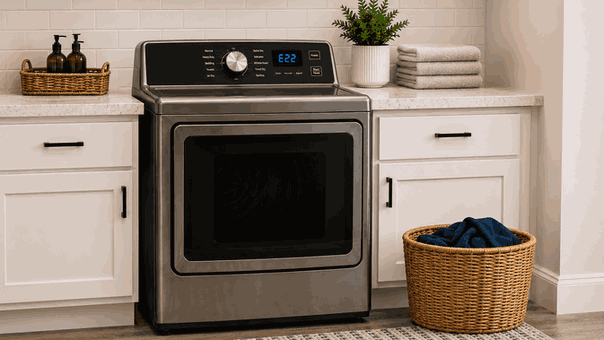
A Fisher and Paykel dryer needs steady airflow, controlled heat, and drum movement to remove moisture from clothing. Warm air must pass through the load, collect moisture, and leave through the vent system.
When drying takes too long, the dryer may not be moving air well enough, heating consistently, or reading moisture correctly. The appliance may finish the cycle, but the drying process is not working efficiently.
The pattern of the delay matters. If every load takes longer, the issue may involve airflow, vent restriction, lint buildup, or weak heat.
If only towels, blankets, or bulky loads stay wet, load size and fabric density may be part of the problem. If the dryer shuts off early while clothes are still damp, the moisture sensor or cycle setting may not be reading the load correctly.
If the dryer feels hot outside but clothes remain damp, restricted airflow may be trapping heat instead of moving moisture out.
Homeowners may notice several signs before the dryer becomes consistently slow:
Clothes need a second cycle
Towels stay damp after drying
Dryer feels hotter than usual
Lint screen fills quickly
Laundry room feels humid
Cycle runs longer than expected
Auto-dry ends too early
Burning smell or overheating concern appears
If there is a burning smell or the dryer overheats, stop using the dryer and request service.
Some long-dry problems start with basic conditions. An overloaded drum can block airflow through clothing. Heavy items mixed with lighter fabrics can dry unevenly. A clogged lint screen can also reduce air movement.
The vent path is another common issue. If the exhaust vent is crushed, clogged, too long, or blocked outside, moisture cannot leave the dryer properly. This can make drying slow and may create overheating concerns.
Repair-level faults are different. A weak heating element, faulty gas ignition system, cycling thermostat problem, moisture sensor issue, blower wheel fault, motor problem, or control failure can keep the dryer from drying efficiently even when the load and lint screen look normal.
Start with the lint screen. Clean it before every load. Check whether the dryer is overloaded and separate heavy towels or blankets from lighter fabrics.
Look behind the dryer if it is safe and easy to see. A crushed or sharply bent vent hose can restrict airflow. Do not pull hard on the dryer or disconnect venting if access is limited.
Check the outside vent flap during a cycle. If little or no air comes out, airflow may be restricted.
Try a timed dry cycle and compare it with auto-dry. If timed dry works better but auto-dry stops early, moisture sensing may be part of the issue.
Do not remove panels, test heating parts, inspect wiring, or run the dryer repeatedly if it overheats.
Running extra cycles may dry clothes eventually, but it does not fix restricted airflow, weak heat, or sensor problems. Repeated long cycles can increase energy use and add stress to heating and airflow components.
If airflow is blocked, continued use can also create overheating risk. A dryer that gets unusually hot, smells burnt, or takes longer with every load should be checked before the issue becomes more serious.
Bestech Repair approaches a Fisher and Paykel dryer taking too long to dry issue by checking the full drying path.
A technician can evaluate airflow, vent condition, lint buildup, blower performance, heating response, moisture sensor behavior, drum movement, and control timing.
The goal is to separate a simple loading or vent issue from a heating, sensor, or airflow-system fault.
A slow dryer can affect the whole laundry routine, especially in busy San Jose homes, apartments, and shared laundry spaces. When every load needs extra time, the dryer is no longer operating efficiently.
Bestech Repair provides Fisher and Paykel dryer repair in San Jose, including long drying times, no-heat problems, airflow restrictions, overheating, dryer noise, drum issues, and cycle interruptions.
A Fisher and Paykel dryer taking too long to dry issue may be caused by overloading, lint buildup, restricted venting, weak airflow, low heat, moisture sensor problems, blower faults, thermostat issues, or control failure.
Homeowners can safely check the lint screen, load size, visible vent condition, outside airflow, and cycle setting. If drying stays slow or the dryer overheats, professional dryer diagnosis is the safer next step.
Bestech Repair – San Jose, CA
📍 Address: 919 S Winchester Blvd, San Jose, CA 95128
📧 Email: office@bestechrepair.com
📞 Phone: +1-408-906-8668
🕒 Open Hours: Monday – Sunday: 8:00 AM – 8:00 PM.
Read reviews about our repair, installation and maintenance services. Our trained experts are always ready to help. To schedule your next appointment, give us a call or complete our online form.

Leave your contact details for communication with the operator, indicate a convenient date for yourself and our operators will contact you or call us: