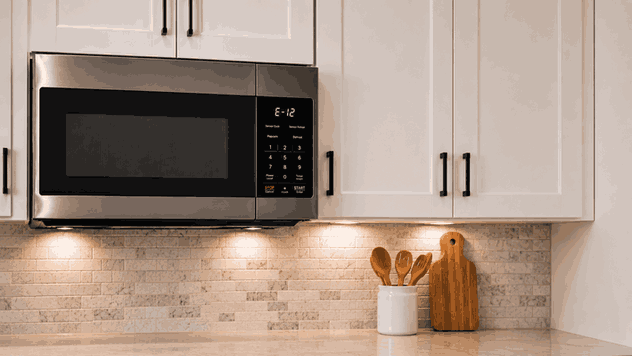
A KitchenAid built-in microwave no power problem usually means the display is blank, the keypad does not respond, the interior light may not turn on, and the microwave cannot start. In some cases, the unit appears completely dead. In others, it may lose power during use, after a power outage, or after several heating cycles.
For San Jose homes, this issue should be handled carefully because built-in microwaves combine household power, control electronics, door-safety circuits, ventilation needs, and high-voltage cooking components. A no-power symptom may come from a simple outside power interruption, but it can also point to an internal fuse, control board, door-switch, wiring, or safety-circuit fault.
A KitchenAid built-in microwave must receive stable power before the display, light, fan, keypad, control board, and cooking system can respond. If power does not reach the control system properly, the appliance may stay silent and blank.
However, a blank microwave does not always mean the home has no power at that location. The issue may be inside the microwave’s control path. Internal protection devices, door-switch feedback, failed electronic controls, or wiring faults can also make the unit appear completely dead.
The most obvious pattern is no display, no beep, no light, and no keypad response. This suggests the microwave is not reaching its normal startup state.
Other patterns are more specific. The microwave may go dead after starting a cycle. It may shut off when the door is opened or closed. It may lose power after heating for several minutes. It may work again later and then fail again. Those details can point toward heat-related control failure, door-switch problems, internal fuse issues, loose electrical connections, or control-board instability.
Some visible conditions can be checked before service. A breaker may have tripped. Nearby kitchen appliances may also be without power. A recent outage may have interrupted the microwave’s normal clock or control state.
Repair-level causes are different. A KitchenAid built-in microwave no power issue may involve an internal fuse, thermal cutout, failed control board, damaged display/control circuit, faulty door-switch system, wiring issue, transformer-related fault, or high-voltage component failure.
Because these parts are inside the microwave, homeowners should not try to inspect or replace them.
Homeowners can safely observe whether the microwave is completely dead or partly responsive. Check whether the display is blank, whether the light turns on when the door opens, whether the keypad beeps, and whether the fan responds.
You can also check whether other nearby kitchen appliances have power and whether the home breaker appears tripped. If a breaker is clearly tripped, reset it only once if it is safe and there are no sparks, burning smells, or repeated trips.
Do not remove the microwave from the cabinet, open the cover, test wiring, replace internal fuses, access door switches, bypass safety interlocks, or attempt internal diagnosis.
A built-in microwave can remain dangerous even when unplugged because high-voltage components can hold an electrical charge. This makes internal inspection unsafe for homeowners.
If the microwave has no power after a reset, loses power again, trips a breaker, smells unusual, sparks, or shuts down during use, stop using it until the appliance is checked by a qualified technician.
Resetting power may bring the microwave back temporarily, but it does not repair a weak control board, failing door switch, damaged wiring, bad internal fuse, or thermal protection issue.
Repeated power cycling can also hide the original failure pattern. If the microwave goes dead during cooking, after door movement, or after heating up, those details are important for diagnosis. It is better to note the timing instead of repeatedly forcing the unit to restart.
Bestech Repair checks the no-power symptom as a full control and safety sequence. A technician can evaluate power response, display behavior, control-board operation, door-switch feedback, internal protection devices, wiring condition, thermal cutout behavior, and whether the failure is related to heat, door movement, or startup.
For built-in KitchenAid microwaves, service also considers installation fit, ventilation, trim clearance, and heat exposure. Restricted ventilation can add stress to control components and may contribute to repeated shutdowns or dead-display symptoms.
A KitchenAid built-in microwave no power problem can stop daily kitchen use completely and may involve more than a clock or display issue. Bestech Repair provides KitchenAid built-in microwave repair in San Jose for no-power symptoms, blank displays, dead controls, breaker-related problems, door-switch faults, internal fuse issues, control-board failures, and built-in microwave shutdowns.
A KitchenAid built-in microwave may have no power because of a tripped breaker, power interruption, failed internal fuse, thermal cutout, door-switch fault, wiring issue, display/control failure, control-board problem, or heat-related electronics failure. Safe checks include observing display response, light behavior, keypad sounds, nearby power conditions, and one clear breaker reset if safe. If the microwave remains dead, loses power again, or trips power repeatedly, professional diagnosis is the safer next step.
Bestech Repair – San Jose, CA
📍 Address: 919 S Winchester Blvd, San Jose, CA 95128
📧 Email: office@bestechrepair.com
📞 Phone: +1-408-906-8668
🕒 Open Hours: Monday – Sunday: 8:00 AM – 8:00 PM.
Read reviews about our repair, installation and maintenance services. Our trained experts are always ready to help. To schedule your next appointment, give us a call or complete our online form.

Leave your contact details for communication with the operator, indicate a convenient date for yourself and our operators will contact you or call us: