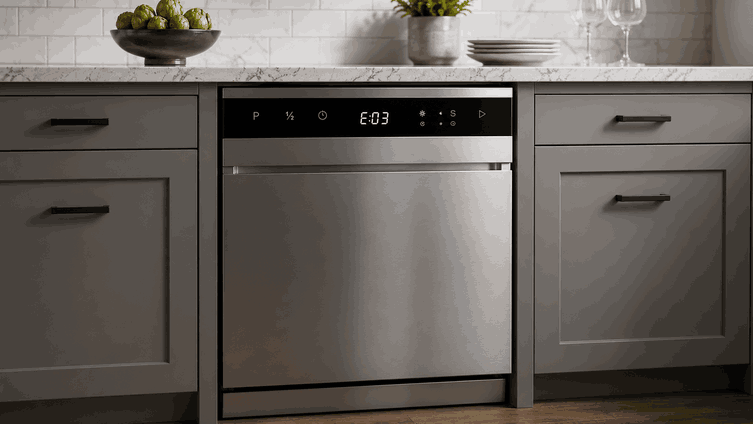
A KitchenAid dishwasher leaking water issue usually means water is escaping during fill, wash, drain, or shortly after the cycle ends. You may see moisture near the front door, under the toe-kick, along the cabinet edge, or under the sink near the dishwasher hose connections.
For San Jose kitchens, this problem should be handled carefully because even a small leak can affect flooring, cabinets, and the appliance base. The cause may involve the door gasket, loading pattern, spray-arm direction, drain restriction, hose routing, water-level control, inlet valve behavior, or internal leak protection.
A KitchenAid dishwasher moves water through several controlled stages, and a leak can appear when one part of that path fails.
During fill, the dishwasher brings water into the tub. During wash, the spray arms move water across the racks. During drain, used water leaves through the hose and connected plumbing. If water escapes during any of these stages, the leak location and timing become important.
Water near the door during washing points in a different direction than water under the sink during draining. Noting when the leak appears helps separate a visible gasket or loading issue from a hose, valve, pump, or water-level fault.
A KitchenAid dishwasher leaking water problem may start suddenly or become worse over several cycles.
Homeowners may notice:
Water near the dishwasher door
Moisture under the toe-kick area
Wet cabinet edge after a cycle
Water under the sink near hose connections
Dishwasher stops before finishing
Door gasket looks dirty, folded, or worn
Water appears only during drain
Leak returns after repeated cycles
Water near the front may involve the gasket, door alignment, spray deflection, or overloading. Water under the sink may involve the drain hose, supply line, or plumbing connection. Water near the base may suggest an internal leak or water-level control issue.
Not every leak begins with a failed internal component.
A rack, pan, utensil, or large dish may stop the door from closing evenly. A dirty or folded gasket can let water escape during wash spray. Incorrect loading can also redirect water toward the door instead of keeping it inside the tub.
A clogged filter area or slow drain path can affect water movement, especially if water backs up during the cycle.
Repair-level causes may include a damaged door gasket, loose hose connection, leaking inlet valve, pump seal problem, float or water-level fault, cracked internal water path, wiring issue, or control-board failure.
A dishwasher leak can spread into hidden areas under the appliance or cabinets. Continued use may increase moisture damage and make the original leak path harder to identify.
Homeowners can check a few visible areas without opening the appliance.
Look around the door gasket for food debris, folding, or visible damage. Make sure racks, pans, and utensils are not blocking the door from closing fully.
Check the bottom filter area for visible debris if your model allows normal user cleaning. Look under the sink for moisture around the dishwasher drain hose or supply connection. Note whether the leak appears during fill, wash, drain, or after the cycle ends.
Do not remove panels, disconnect hoses under pressure, test wiring, bypass leak sensors, force the door latch, or reach into hidden pump or base areas.
Running another cycle may seem like a quick test, but it can send more water into the same leak path.
If the KitchenAid dishwasher leaking water issue returns after basic visible checks, stop using the appliance until the source is identified. Repeated cycles can increase moisture under the dishwasher, damage nearby cabinets, and stress the pump or valve system.
Bestech Repair checks where the water leaves the normal path and which cycle stage triggers the leak.
A technician can evaluate gasket condition, door alignment, tub-edge sealing, spray-arm behavior, filter and drain response, hose routing, inlet valve operation, float feedback, pump area, leak-protection signals, and control communication.
The goal is to separate a loading, gasket, or visible drain issue from a KitchenAid dishwasher valve, hose, pump, seal, float, wiring, or control fault.
A leaking dishwasher can interrupt kitchen cleanup and create water-damage concerns quickly. Bestech Repair provides KitchenAid dishwasher repair in San Jose for water leaks, drain problems, fill faults, door-seal issues, poor cleaning, and cycle interruptions.
A KitchenAid dishwasher leaking water issue may be caused by poor loading, a dirty or damaged gasket, blocked filter area, drain backup, hose problems, overfilling, inlet valve trouble, pump leakage, float faults, wiring issues, or control failure. Homeowners can safely check the visible gasket, door closure, filter area, under-sink moisture, and leak timing. If water returns, professional diagnosis is the safer next step.
Bestech Repair – San Jose, CA
📍 Address: 919 S Winchester Blvd, San Jose, CA 95128
📧 Email: office@bestechrepair.com
📞 Phone: +1-408-906-8668
🕒 Open Hours: Monday – Sunday: 8:00 AM – 8:00 PM.
Read reviews about our repair, installation and maintenance services. Our trained experts are always ready to help. To schedule your next appointment, give us a call or complete our online form.

Leave your contact details for communication with the operator, indicate a convenient date for yourself and our operators will contact you or call us: