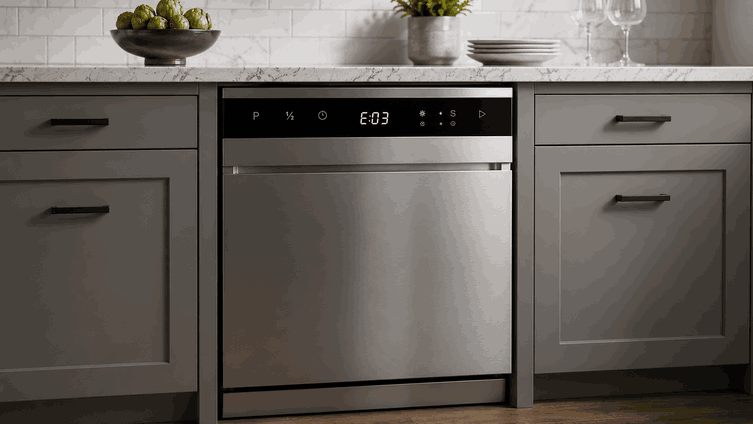
An LG dishwasher not drying dishes problem usually becomes clear after the cycle ends. The dishes may look clean, but glasses stay wet, plastic items hold water, and moisture remains on the tub walls or door. Sometimes the dishwasher completes the cycle normally, but the drying result is still weak.
For San Jose homeowners, this issue can be frustrating because the appliance appears to run, wash, and drain. The problem is not always a full dishwasher failure. It may involve rinse aid, cycle selection, water temperature, venting, airflow, heating response, or a control-related drying fault.
After the wash and rinse stages, an LG dishwasher still has one more job: removing enough moisture from dishes so they are ready to unload. Depending on the model, the dishwasher may rely on heated rinse water, rinse aid, internal venting, condensation drying, fan movement, or a drying assist system.
When dishes stay wet, the dishwasher may have washed correctly but failed to complete the drying process. That can happen when heat is too low, moisture cannot escape properly, or the drying system is not responding as expected.
The location of the moisture matters. If mostly plastic containers stay wet, the dishwasher may be struggling with normal drying limitations because plastic does not hold heat as well as glass or ceramic.
If everything stays wet, including plates, glassware, and silverware, the issue may be broader. It may involve low rinse temperature, no rinse aid, vent trouble, heating-system response, or a control problem.
If water sits on the door or tub walls after every cycle, the dishwasher may not be managing condensation correctly. If dishes are wet and there is standing water in the bottom, the problem may be connected to drainage instead of drying alone.
Homeowners may notice drying performance decline gradually before it becomes a consistent problem:
Dishes are clean but still wet
Plastic items stay covered with droplets
Glasses dry poorly or look cloudy
Moisture remains on the dishwasher door
The tub feels cool after the cycle
A drying option no longer improves results
Standing water remains near the bottom
A cycle seems shorter or different than before
These details help show whether the issue is related to normal drying conditions, user settings, drainage, or a repair-level fault.
Some drying issues come from basic conditions. If rinse aid is empty, drying performance can drop noticeably. Rinse aid helps water sheet off dishes instead of forming droplets.
Cycle choice can also matter. Short, eco, or low-temperature cycles may use less heat and may leave more moisture behind. Overloading can block airflow and keep water trapped between dishes.
Plastic items are another common factor. Even when the dishwasher is working correctly, plastic cups, lids, and containers often stay wetter than glass or ceramic.
Repair-level causes are different. A faulty vent, failed fan, heating element problem, thermistor issue, control fault, or drainage problem can keep the dishwasher from drying properly. These problems are more likely when all dishes stay wet across different loads and cycles.
Start with the rinse aid dispenser. If it is empty, refill it and run a normal cycle with a drying option selected.
Check the cycle settings. If you usually use a quick or energy-saving cycle, try a standard cycle with heated dry or extra dry if your model offers it.
Look at how the dishwasher is loaded. Avoid nesting bowls, blocking spray movement, or placing plastic items where water collects easily. Make sure cups and containers are angled so water can drain off.
Open the door after the cycle and look for standing water in the bottom. If water remains, drying may be poor because the dishwasher is not draining fully.
Do not remove panels, test heating parts, inspect wiring, or force internal vents open. Drying-system faults should be diagnosed properly.
Running the same cycle again may warm the dishes temporarily, but it usually does not correct the cause. If the dishwasher is not heating, venting, draining, or using rinse aid correctly, repeat cycles can waste water and energy without improving results.
Repeated weak drying can also make homeowners assume the dishwasher is “just old,” when the issue may be a specific drying-system fault. If drying performance changes suddenly or stays poor across several loads, the appliance needs closer attention.
Bestech Repair diagnoses an LG dishwasher not drying dishes issue by looking at the full end-of-cycle behavior. A technician can evaluate rinse aid use, cycle settings, water temperature behavior, drainage, vent operation, fan response, heating components, sensor feedback, and control communication.
The goal is to separate normal drying limitations from a real dishwasher fault. This helps avoid unnecessary part replacement while restoring dependable drying performance.
In San Jose homes, a dishwasher that washes but leaves dishes wet can still disrupt the kitchen routine. Unloading takes longer, cabinets may receive extra moisture, and the same dishes may need towel drying after every cycle.
Bestech Repair provides LG dishwasher repair in San Jose, including drying problems, weak wash performance, drainage issues, leak warnings, error codes, vent concerns, and cycle interruptions.
An LG dishwasher not drying dishes problem may be caused by missing rinse aid, low-heat cycle settings, poor loading, plastic items, low water temperature, drainage trouble, vent failure, fan issues, heating faults, or control problems. Homeowners can safely check rinse aid, cycle selection, loading pattern, and standing water. If dishes stay wet across different loads, professional dishwasher diagnosis is the safer next step.
Bestech Repair – San Jose, CA
📍 Address: 919 S Winchester Blvd, San Jose, CA 95128
📧 Email: office@bestechrepair.com
📞 Phone: +1-408-906-8668
🕒 Open Hours: Monday – Sunday: 8:00 AM – 8:00 PM.
Read reviews about our repair, installation and maintenance services. Our trained experts are always ready to help. To schedule your next appointment, give us a call or complete our online form.

Leave your contact details for communication with the operator, indicate a convenient date for yourself and our operators will contact you or call us: